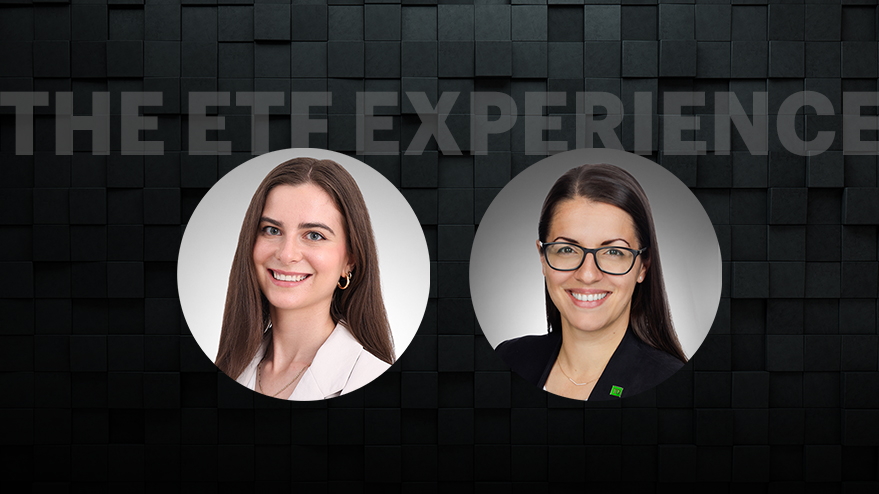
Isabela: Today, we're breaking down the four biggest mistakes investors make when creating an ETF only portfolio. From jumping on the latest trends to over diversifying. And yes, this happens more frequently than you'd think. We'll unpack what to look out for and how to build smarter, stronger portfolios. Joining me today is Alexandra Gorewicz, portfolio manager at TD Asset Management. Welcome to the podcast, Alex.
How are you doing today?
Alex: I'm great, thank you. Isabella It's great to be here.
Isabela: Awesome. I saw you speak on TD Money Talk, and as soon as I saw that, I was like, I need Alex as a guest on this podcast. So here we are, a video podcast.
Alex: I know I made a joke about that earlier, but yeah, this is super cool. I love it.
Isabela: Awesome. Well, let's just jump right into it. ETFs are constantly making headlines and new products are launching all the time to the point where actually there's more ETFs in the U.S. right now than there are individual stocks.
Alex: Which is wild!
Isabela: Right? Yeah. So with that, how should someone decide if a new ETF actually fits into their portfolio rather than it just being kind of the hot pick of the moment?
Alex: So I would say there are two key things that come to mind when you're investing. You're trying to solve for something like what is your goal with the investment? Are you trying to save for this like great trip in a couple of years or are you trying to save for a down payment on your first property, let's say in like 5 to 10 years from now?
Alex: How you're going to invest will differ. But the premise of investing is suitability. And as a portfolio manager, I think a lot of people might be surprised that I spend a lot of my time trying to figure out what is a suitable investment for a particular strategy I manage because I manage a lot of different types of strategies.
So we have to be sure that, you know, the sources of return, the risks that we're taking, the markets that we're playing in are appropriate for the particular strategy. And there's a lot of financial innovation in markets constantly, even in really established markets like bond markets. So it's important to constantly do due diligence. It's not just a one time exercise.
And the other part that I think about those also is liquidity. And this kind of goes hand-in-hand with this concept of like, what are you trying to solve for? Because you know, when I think about hot trends, like think back to meme stocks, they're I guess there's still kind of a thing. Yeah, kind of.
Isabela: Yeah. They pop up every ...
Alex: That's very they pop out every so often. But I feel like a couple of years ago there were new ETFs that were launched and unfortunately they didn't get critical mass with investor base. And so if you're thinking that you're one of those investors that went in there and now you can't get your money out, but you need it for something good, you know, for some financial goal that you had for this year or next year.
Yeah. You know, you're… you're in a bit of a pickle.
Isabela: Exactly. Kind of an analogy that comes to mind for me is like that one friend who always tries the new restaurant the week it opens. And so it's either, you know, it can be really good or it can just be overhyped. And the same thing goes with ETFs when they launch like that first week, you know, you got to really do your due diligence and understand what you're investing in.
Alex: Yeah, 100%.
Isabela: Which kind of leads into our next point where on the surface ETFs might seem quite simple, but they can be pretty complex and not all ETFs are created equal. So my next question is for you. What are some key things that investors should look out for and like look under the hood when deciding which ETF to add to their portfolio?
Alex: So there are a couple of like key criteria, but this is not an exhaustive list by any means. All right. So when you think about an investment vehicle, one of the first questions that I would have is, is it active or is it passive? And, and really passive basically means you're trying to track a particular benchmark or a particular index.
And active would mean, you know, hopefully you're trying to outperform it. But that leads to sort of the next point, which is what is that benchmark? What is that index? So understanding really be the market, the geography, the asset class that that you're you're playing in ... extremely important. And then this is probably one of the sort of newer trends with like ETFs and that is introducing leverage.
I think that's extremely important because that also ties in to performance expectations. Again, if it's an actively managed product and you can take leverage, but the ETF is only generating index like returns like, well, you know, you got to you got to really understand how that manager is investing. You know, you and I were talking a little bit about when we were trading stories about, you know, what we did like after graduation or, you know, starting to work.
Well, when I moved out on my own after graduation, I you know, I couldn't I couldn't afford, you know, putting up my place with anything other than a plant. And I thought, well, like, how hard could this possibly be?
Isabela: It’s just a plant....
Alex: Is the plant. And it turns out it was a lot harder or there was is the directions about, you know, watering the plant and how much sunlight and like put it in the shade or in direct sunlight or oh, it turns out like I liked, you know, camping in the summer. And I was away quite a bit and there was no one to take care of it, like in order....
Alex: It's it's the same thing with investing, right? In order for that plant to thrive, in order for your investing to thrive, you really have to understand all those like different, like little minutia, all the little criteria. Otherwise, yeah, I'm ashamed to say a few plants did not make it.
Isabela: It's like I feel like with time you learn. You learn from your mistakes too, and you grow. And. And now I'm sure you have a green thumb.
Alex: I wouldn’t call it a green thumb, but I'm doing okay. I could grow some veggies and herbs now.
Isabela: Amazing - that's one more than me.
Alex: Good. Okay, great.
Isabela: I guess another component one looking under the hood, one of these criterias would be actually fees as well. So ETFs in general are known for being low cost, but these fees can still add up. So there was actually a study done that showed that only a 1% annual fee difference can cost you 30% of your returns.
Alex: Yeah, which is that's an eye popping number.
Isabela: Indeed it is. So in your view, like when is it worth paying a bit more for an ETF and when should investors stick to the lowest cost options?
Alex: So it probably goes back to all those factors I mentioned earlier, which is active versus passive. And so obviously, if the manager is trying to outperform and actively manage strategy and you probably going to be charged more and assuming that they're able to deliver on that, then, you know, that's again, something that needs to be taken into account in that due diligence process.
Alex: And then probably another consideration would be niche market or niche asset class or maybe even niche sector, something that's not very mainstream as a strategy or is like a targeted sort of investment. I think that is where you would probably expect to see higher costs as well.
Isabela: I feel like you can kind of bring that back to think about it in the way where it's like paying $5 for a latte every single day for 30 years and never having the opportunity to drink that latte. So that's how quickly and quietly fees can add up over time, as an example.
Alex: Yeah. And you know, there's another like personal way that I think about it, and that is, you know, the utility of a lot of subscriptions in our lives. Right. And I think back to like when I was in my twenties, it's like we didn't have anywhere near the level of subscription that exists today to access, you know, like media, whether it's like magazines, TV shows, movies and, you know, if you're if you're not using them, if you're not, you know, being actively involved in them, that's a lot of costs that you're incurring for for what?
Isabela: And they will add up. And like over the first year or two, you might not notice it, but ten years down the road, ten years down the road, they'll be like, Well.
Alex: Yeah, I spent a lot of money.
Isabela: Where did that money go?
Alex: That's right.
Isabela: So a lot of people believe that the more ETFs you own, the more diversified you are. And this is not always the case. So how can an investor tell whether they are truly diversified?
Alex: So now I'm at the stage in my life where I have young kids and I spend a lot of time on the playground. So my allergies usually are around ... something on the playground like a seesaw, right? So this is really simple, but if, you know, you observe over, let's say a couple of weeks on a daily basis that one of your ETFs is going up and the other one's going down, and then let's say the next day they go vice versa.
Alex: So again, it's like that seesaw effect and probably means there's very little overlap between your investments. But I'd also tie it back to the importance of understanding how diversified or not diversified your investments are. I also tie that back to, again, your financial goals. What are you trying to solve for? Because if you end up with two ETFs with the problem of like overlap.
Alex: So let's see, you know, they tend to move together on a daily basis and 60 70% of what's held in each ETF is similar. Well, that's probably not what you want to own if you're solving for that trip in a couple of years versus solving for that down payment in a decade. So just be, you know, really, really mindful that diversification or lack thereof could have meaningful implications for being able to meet your financial goals.
Isabela: Absolutely. And I think this also ties in to our second point where it comes to understanding, like what's under the hood of the ETF. So you may think that just because an ETF has global in the name, that it's diversified globally. But when you look into the details like 60 80% of it is within North America and maybe you are looking for that international exposure.
Isabela: So then you have to go and find something else.
Alex: Correct. But it's like my my plants ... It's all part the learning process.
Disclaimers
The statements and opinions contained herein are those of the participants and do not necessarily reflect the opinions of, and are not specifically endorsed by, TD Asset Management Inc. or its affiliates.
The information contained herein has been provided by TD Asset Management Inc. and is for information purposes only. The information has been drawn from sources believed to be reliable. The information does not provide financial, legal, tax or investment advice. Particular investment, tax, or trading strategies should be evaluated relative to each individual's objectives and risk tolerance. It is not an offer to buy or sell, or an endorsement, or recommendation or sponsorship of any entity or security discussed.
Investment strategies and current holdings are subject to change.
This document may contain forward-looking statements (“FLS”). FLS reflect current expectations and projections about future events and/or outcomes based on data currently available. Such expectations and projections may be incorrect in the future as events which were not anticipated or considered in their formulation may occur and lead to results that differ materially from those expressed or implied. FLS are not guarantees of future performance and reliance on FLS should be avoided.
TD Asset Management Inc. is a wholly-owned subsidiary of The Toronto-Dominion Bank.