

Guide to International ETFs: Building Your "Passport Portfolio" | The ETF Experience
Published: April 29, 2026
Market Perspectives + 20 minutes = Current Insights
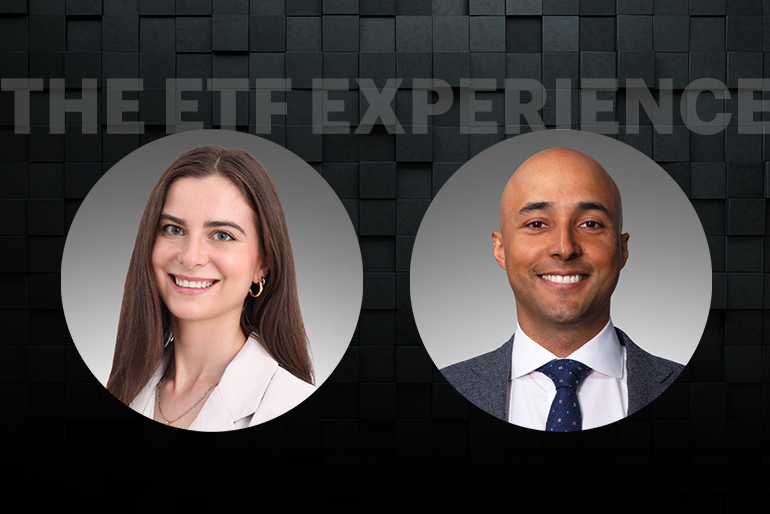
International ETFs are a simple way to invest in markets outside your home country. If you're trying to pick out an international ETF, though, you'll notice it's not quite the same as planning your summer vacation.
Should you invest in international, global, or emerging markets? Each option offers a different level of exposure to countries, regions and economies.
In this episode, investors of all levels will learn how to use international ETFs to diversify their portfolio, reduce risk, and gain access to growth opportunities around the world.
Follow TDAM Talks on your preferred podcast platform


Hosts:
- Isabela Sagan, Manager, ETF Business Development, TD Asset Management Inc. (TDAM)
- Andres Rincon, Managing Director, ETF Sales & Strategy, TD Securities
Highlights:
- What is the difference between international markets, global markets, and emerging markets? (2:41)
- How do you invest in international ETFs? (4:41)
- What is home bias investing? (10:15)
- Should you use passive or active ETFs to get international exposure? (13:03)
- What are the pros and cons of international investing? (16:16)
Transcript:
Isabela: Welcome back to the ETF Experience Podcast. My name is Isabella Sagan, and today we're going to be talking about international investing with ETFs. Joining me today is Andrés Rincon from TD securities. Welcome, Andrés! How are you doing today?
Andrés: I'm doing great - and thank you for having me!
Isabela: Thank you for being here! Before we jump into things, could you tell us in 2 to 3 sentences: What is your role at TD securities?
Andrés: So, I head the ETF Sales and Strategy desk at TD securities - TD securities is the dealer within TD Bank. And, really, our role is to make markets on ETFs - that simple. We put a bid in an ask on the board, to make sure that when an investor wants to buy or sell that ETF there's a price there.
Isabela: Awesome. Perfect. So, without you, we wouldn't have pricing.
Andrés: That's right. There would be no bid or no ask in many cases.
Isabela: Cool.
What countries are considered emerging markets?
Okay, so, I actually wanted to start off with a geography quiz - before we answer our listeners' top questions and dive into definitions. So, the way this quiz is going to work is: I'm going to name a country. And you're going to tell me whether or not it's considered an emerging market.
Andrés: Okay.
Isabela: Are you ready?
Andrés: Ready.
Isabela: Okay. China.
Andrés: Emerging market. Obviously, the second largest economy in the world - but I believe one of the reasons why it's still emerging market, it's because of its access to its actual markets, which is not necessarily there - and also the income per capita is quite low still.
Isabela: India.
Andrés: Emerging market - one of the fastest growing!
Isabela: Brazil.
Andrés: Definitely an emerging market. Largest economy in South America - but it's still an emerging market.
Isabela: Australia.
Andrés: I've been there several times. Definitely developed.
Isabela: Okay! And Mexico.
Andrés: Although it's part of North America, it's still considered an emerging market. Yeah. I actually have one for you, if that's okay.
Isabela: Yeah!
Andrés: Okay! So: What about South Korea?
Isabela: Depends on the index that you're looking at.
Andrés: Depends - or both, I guess, in that case.
That is an interesting one, because some index providers will consider it an emerging market, and some a developed market.
And even though the economy is already developed, let's say, it doesn't have great access to the markets - yada yada yada. So MSCI considers it emerging market still (which still baffles me, to be honest). But it is what it is.
So, some ETFs will have it, and some ETFs will not have it, depending on the exposure. Anyways.
Isabela: That's why it's important to take a look at the underlying index when you're deciding which ETF to invest in.
Andrés: That's right.
What is the difference between international markets, global markets, and emerging markets?
Isabela: Okay, so maybe we can talk a bit about the definitions now. So, can you tell me: What is the difference between international markets, global markets, and emerging markets?
Andrés: Yeah - so, I'll start with global, because it basically encompasses everything.
What are global markets?
So, global is: You have all sorts of economies – so, emerging, developed, global - the whole thing.
Actually, within global, you have different mandates, you have total markets. So, in reality, there's - within the global concept, there's some sub areas where you can get different exposures.
But overall, and broadly speaking, it's the entire market that you're getting.
And this is all countries, regardless of where the ETF is listed. This is very important, because in international markets what really matters - or what distinguishes international versus global - is where the ETF is listed.
So, I'll give you an example: In Canada, if you have an ETF that is listed in Canada and it's an international ETF, then it usually excludes the country of listing - so we exclude Canada. (Most often, it excludes also the U.S., just because we're so close to each other, and a lot of Canadian investors are heavily invested in the U.S., too.) So it really depends on that market.
What are international markets?
So, generally, international is global without the markets that are local to the investor - basically. So that's the main distinction point.
For example, if you're in Europe and you have an international ETF in Europe, most of those names are actually either "Global" or "Global X Europe." Not necessarily "Global X (the country)": It's generally "Global x Europe." They don't get that specific sometimes. But that's the idea - international gives you exposure to most of the markets that are not near you.
What are emerging markets?
And then you have emerging market – which, as the name implies, these are high growth areas. Generally a little bit less stable politically, a little bit more risk, a little bit (perhaps) more reward, but gives you exposure to countries are developing their economies globally.
Isabela: Perfect! These are great definitions to understand before we jump into additional details, so thank you for that.
How do you invest in international ETFs?
Actually, one of the most common questions we got from our audience is: how to invest in international ETFs.
Very broad question, but I thought I'd start off by sharing kind of three main factors to consider.
1. Decide on geographical exposure
So, number one is going to be: deciding which geographical exposure you want to get with this ETF that aligns with your goals and your time horizon. So, maybe you want a broad international index ETF, or a country specific ETF.
2. Decide on active vs. passive ETFs
Number two: Pick if you want active or passive to get this exposure. And this is important because, for example, (usually) active ETFs tend to have higher fees associated with them compared to passive.
3. Pay attention to when the markets are open
And number three is: Be aware of the time of day that you're making the trade. So, if you're in Canada, our markets are open between 9:30 a.m. and 4 p.m. But, for example, in Europe, certain countries are six hours ahead. So, when you're deciding to buy the ETF with this international exposure, you want to make sure that underlying market is open - so that you're getting fair price and liquidity.
Now, this is your bread and butter, Andrés, so it kind of leads me to my next question: What would you consider best practices from the trade execution part of international investing?
Andrés: And I'll get to that. But, actually. before I get to that answer, I wanted to touch on one of your first points on - you know, you can get - how narrow you want your exposure.
Don't forget about single-country ETFs
Andrés: People forget that there's also single country ETFs. And, you know, often when people think about international investing, they just think about just the broad market.
But there's also single country ones. Generally speaking, some issuers in the U.S. and Canada offer them. They're relatively cheap.
But that's more targeted, if you really want exposure to a certain event or something that's happening within a specific economy.
Isabela: Yeah. And there's definitely lots of education that you have to do about that, as well, to understand that specific country's economy.
Andrés: That's right.
Buying an international ETF
Now, back to your question, which – obviously, it's very important.
So, what I would say is that (the first thing that is very important for investors to understand is that) what really happens when you buy an international ETF?
How do international ETFs work?
So, this international ETF (or "the ETF") is just a wrapper of securities.
Many of these securities, especially when you're looking at an international ETF, are not listed in your time zone - are listed in different countries.
So, it's important to be cognizant - that when you're buying an international ETF, you're buying often (not always, but often) an ETF that has exposure to securities that are in markets that are closed. Right?
If you're buying an Asia-focused ETF, for example, those markets are very likely closed - or not very likely, they are closed - when the Canadian market is open.
Europe, generally speaking, closes between 10 and 12 (or European markets - close between 10 and 12 in local time here).
So, often, people need to also understand that after 12, generally speaking, all or a big chunk of the markets in international ETFs - they're all closed.
So, you have to think about it from a hedging perspective and a trading perspective. How does the market maker actually go and hedge that exposure? Because all the markets are closed, so it's actually harder. So there's - without getting into the weeds as to how the market makers hedge that exposure, it is harder to do so. And that's the most important thing to understand, because it's harder to hedge when the market is closed.
It's important to understand that it's often better to trade when the markets are open.
Risks and considerations when trading international ETFs
Isabela: And does this matter, for example, like, if I want to do like a large trade versus a very small trade? Like, is there any differences there?
Andrés: Yeah. So, obviously, how market making generally works is that - we will always have a certain size on the board to buy and sell. As the risk gets larger and the trade gets larger, generally it becomes harder for us - because it's harder, more risk, obviously.
So, what we generally tend to tell people is: If you're looking at executing something on the board or in international ETFs, you should use – obviously - limit orders (versus market orders). That's very important.
Now, if you're in - and this is not for everybody – so, if you're an advisor, for example, and you have access to a trading desk that can deal directly with a market maker (being independent or bank owned) and you have access to NAV trading - then that's something that we're seeing more and more in size.
So, for larger trades and international ETFs, they're seeing a lot more NAV trading ("net asset value" trading). So, similar to a mutual fund - when you buy or sell a mutual fund you can NAV - you can do the same thing with ETFs.
And the benefit of that is that, generally speaking - what NAV trading in ETFs does is that - you buy or sell ETFs at NAV, so you basically are waiting for all the markets within that ETF to close. And you're getting the closing value for those securities at a certain point in time, instead of putting the risk on the market makers to guess what that price will be tomorrow when all the markets close.
So, you either - your options really are - you either put a limit price out there (or working order, or let's say), knowing that a market maker will be taking risk and they'll be spread to that because the markets are closed.
Or, you're doing NAV trade, if you have the ability to do so. And then in that case, the investor's taking the overnight risk of that - those markets - for example.
So, those are the ones that we mention quite often.
One that is also often forgotten is that, when you're investing internationally (we can see this in these markets today), FX is a big component of that market. And it will move the price of the ETF over time.
Isabela: Gotcha. That could be - later on, we'll talk about pros and cons, and - that could be one of our cons we might dive into.
What is home bias investing?
I want to change things up a bit here, the direction - I want to talk about home bias for a bit.
So, most of us tend to stick to what we know. That's normal human nature. And when it comes to our portfolio, that can actually be really risky.
So, for example, Canada makes up only around 3% of the investable universe in equities. And that's smaller than NVIDIA, which is around 5%.
Andrés: And sort-of sad. But yes.
Isabela: Yes. And, you know, the facts are that we have seen incredible returns in the Canadian market. For example, last year - 32%. The year before that - 22%.
And when a young investor sees these high double-digit returns, they might want to double down on their Canadian exposure.
So, to not have this home bias - and to get rid of that - how should investors assess international and global ETFs to determine which one fits best for their portfolio and strategy?
How to avoid home bias
Andrés: The best way to look at that is really to understand what's in your portfolio. And I'm going to be honest: This is not easy for every investor to do.
Let's say you own ten ETFs. It's hard for everybody to understand what's in their ETF - they might have thousands of securities in there. So, if you're an advisor, you should ideally know what your breakdown and exposures are. If you're a direct investor, it's not always as easy.
But the first thing is you need to understand exactly what's in your portfolio. What countries are you exposed to - what regions, what type of asset classes you're exposed to.
Once you understand your current exposures, then you can assess what you're missing or where is it best to focus on.
As you alluded to, most people kind of tend to go towards what they know best. So, everybody knows TD Bank, all the Canadian banks - also they will know the Canadian grocers - they will know all the Canadian companies. They are comfortable with them. They see them every single day. So they tend to invest heavily in these companies.
But then that creates concentration. And that's not just a Canadian issue. That's obviously also a U.S. issue - a lot of U.S. investors especially are only invested in the U.S. or very heavily. Canadian investors at least have exposure to the U.S., Canada - but less so to international.
And that's where it's important to understand: how much exposure you have to the U.S., how much exposure you have to Canada, and then what else is out there in the world that you don't have exposure to?
You need to understand: "Okay, here are my gaps" - and then look to fill those gaps - with a single country ETF, emerging market developed ETF, yada yada yada.
So, that's basically the the main way that you go about identifying what you need to do - if you need to invest in global, which is all the above, or international, which is more likely what you don't have in your portfolio today.
Isabela: Got it.
Should you use passive or active ETFs to get international exposure?
So, we've determined that getting that international exposure is crucial for your portfolio.
Now, bringing it back to one of the three factors I listed at the start:
Should you use passive or active ETFs to get this exposure?
Andrés: So, it really depends on the investor. There's no right or wrong answer.
And, you know, there's been a lot of literature and books written about "passive versus active." So I'm not going to get into the weeds on them.
Benefits of passive ETFs for international investing
But, broadly speaking, with a passive investment (generally) it's lower cost. It's very transparent. So, because these ETFs don't rebalance on a daily basis - they rebalance at a set point a time, let's say quarterly or twice a year, let's say - you very much know what you're exposed to. You also very often know the different regions specifically that you're exposed to.
So, as I mentioned earlier, if you're invested in an ETF that has exposure to Korea (or not), you know that you have exposure to Korea (or not).
And that's very important. That's important - to understand which countries you are exposed to, and the costs of that exposure, and that you're getting broad-based exposure. And that's all been provided to you with passive.
It's an all-in-one solution - simple solution - generally very low cost.
Benefits of active ETFs for international investing
Now, one of the benefits of going towards the active world is that these markets (or special international markets) tend to be less efficient compared to a U.S. market. Because of that, you do have portfolio managers who specialize in these markets.
They travel all the time. They get to meet these companies worldwide. And because of that, they understand these markets better than most local investors would.
And because of that, they often find more opportunities abroad. Not always, but sometimes. So that allows (some of) these managers to outperform.
And, in fact, if you look at the investors here in Canada, often when it comes to investing abroad and giving their money to a fund manager - international is one of those key areas where almost always the investor in Canada is comfortable enough giving their assets to a money manager to invest abroad, because it is a little bit more complicated.
Isabela: Interesting. I didn't know about that.
Andrés: Yeah. But, obviously, that comes at a cost: You have to pay that portfolio manager. And so the fees are - tend to be - a little bit higher on that front.
But, you know, we're seeing that right now, like the growth of active in North America - in the ETF land - is growing quite rapidly.
So, in Canada, a quarter of the market is active (a little bit more than that). And we are a leader globally, in terms of assets in active. But last year half of the flows into ETFs was in active in the U.S. - only 10% or so, 11% of AUM is active. But that has ballooned over the last three years.
And, you know, a third of flows last year in U.S. ETFs was in active ETFs. So they've seen tremendous growth. And these are two key areas - two key areas that have seen tremendous growth is fixed income and international exposure.
Isabela: So I guess we're talking about a hot topic, then, that aligns with trends.
What are the pros and cons of international investing?
Okay! So: What are the pros and cons of international investing?
Andrés: Well, we've mentioned a couple already.
Pros of international investing
I mean, it's a one ticket solution to having a diversified portfolio of international securities, let's say - or global securities.
So, it's hard to beat that, to be honest - where you click one button and you get exposure to hundreds, if not thousands, of companies worldwide.
You get exposure to companies that are leaders in their industry that are not in your home country, you know, many of those being in Korea - or Japan - or Europe in general - you get exposure to all those fascinating countries in a single ticket.
And that also allows you to tap into growth areas that perhaps are not in the same wavelength as they are here in North America. They have different economies that have different factors that impact them.
So, you know, just - right now with what's happening geopolitically - there's a lot of differences in how emerging markets behave versus local markets. So, the whole point of this is that all these markets are different - and that's what diversification is about.
So those are the main pros of investing globally.
Cons of international investing
One of the cons, I would say - it's not a con today at all - but it has been historically - is that the U.S. market has historically been very strong.
So, the Canadian or U.S. investor has always asked themselves, like, why am I investing abroad when the U.S. market or the Canadian market is so strong? But, you know, that historically has been the case to some degree - but definitely not over the last few years.
So, performance-wise, Canada, for example, has outperformed (or outperformed last year) the S&P 500. And a lot of the emerging markets did. And we see that in flows.
And we were talking about home country bias not long ago: Right now Canada is seeing more buying from Canadians than ever before. The second highest region that is being bought is international, and the third is U.S. But if you look back, let's say, just two years ago, that number was actually all going to the U.S. (or for the most part).
So, you can see that Canadians are starting to realize that - obviously driven by performance to some degree, but - realize that they are very heavy in the U.S. in the MAG 7, for example, and perhaps they should look abroad in different regions.
So, the flip side to that, and once again, is one of the cons: Historically, performance hasn't beaten necessarily the market, but it has today.
Just higher costs, generally speaking, when you invest globally.
Generally speaking there's more friction, to buy and sell the securities.
Then there's more risk, obviously, developed markets are developed for a reason, and emerging markets are emerging for a reason.
And there's generally more geopolitical risk, which means more volatility sometimes. Sometimes, that volatility actually offsets local volatility. But it's hard to say, depending on what's happening.
So, those are some of the pros and cons that we'd see.
And back to trading – it's a little bit harder to buy an international ETF than a local ETF, but in reality not too much.
But just some more considerations there.
Isabela: Absolutely. That all makes sense. I liked how you talk about access to industry leaders, like LVMH - or Toyota – Adidas - maybe some of us are wearing something -
Andrés: Novo Nordisk, and a lot of these companies.
Isabela: Yeah, exactly!
Diversifying internationally: Summary
Okay. To wrap things up:
Remember that the world of opportunity extends far beyond our borders, and diversifying internationally is one of the most effective ways to build a resilient and long-term portfolio.
Thank you for listening today – and, as always, stay curious, stay informed and stay invested.
Disclosures
The statements and opinions contained herein are those of the participants and do not necessarily reflect the opinions of, and are not specifically endorsed by, TD Asset Management Inc. or its affiliates.
The information contained herein has been provided by TD Asset Management Inc. and is for information purposes only. The information has been drawn from sources believed to be reliable. The information does not provide financial, legal, tax or investment advice. Particular investment, tax, or trading strategies should be evaluated relative to each individual's objectives and risk tolerance. It is not an offer to buy or sell, or an endorsement, or recommendation or sponsorship of any entity or security discussed.
Investment strategies and current holdings are subject to change.
This document may contain forward-looking statements (“FLS”). FLS reflect current expectations and projections about future events and/or outcomes based on data currently available. Such expectations and projections may be incorrect in the future as events which were not anticipated or considered in their formulation may occur and lead to results that differ materially from those expressed or implied. FLS are not guarantees of future performance and reliance on FLS should be avoided.
TD Asset Management Inc. is a wholly-owned subsidiary of The Toronto-Dominion Bank.
Additional Resources