X
How to Choose the Best ETFs for Your Investment Goals
By Hiren Amin, Read bio | Updated on July 27, 2026
Get Started with TD Direct Investing
Summary
ETFs can help investors build diversified portfolios at a relatively low cost, but not all ETFs are built the same. When choosing ETFs, it’s important to consider your investing goals, risk tolerance, fees, performance history, and the assets the ETF holds. Tools like TD WebBroker can help you compare ETFs and narrow down your options.

With thousands of exchange-traded funds (ETFs) available in Canada, finding the right one can feel overwhelming. Some ETFs focus on broad market growth, while others target dividends, sectors, commodities, or global markets.
The good news is that once you understand what different ETFs are designed to do, it becomes much easier to narrow down your options based on your goals, risk tolerance, and investing style.
ETFs in Human Terms
An ETF can be thought of as a diversified basket of investments.
Instead of buying dozens of individual stocks or bonds one at a time, an ETF lets you buy many investments together in a single trade.
Types of ETFs
With so many ETFs available, it helps to focus on a few key factors when comparing your options. The chart below highlights some of the most common things investors look at when evaluating ETFs.
| Factor | Why It Matters |
| Fees (MER) | Lower fees can help improve long-term returns |
| Holdings | Shows what the ETF actually invests in |
| Performance | Helps you evaluate historical returns |
| Risk Level | Some ETFs fluctuate more than others |
| Dividend Yield | Important for income-focused investors |
| Trading Volume | Higher volume can improve liquidity |
Looking at these factors together can help you narrow down ETFs that better align with your goals, risk tolerance, and investing style.
Sector Tracking ETFs: These ETFs track the 11 economic sectors that represent key areas of the economy such as Energy, Health Care, Information Technology, Real Estate, Industrials, Utilities, Materials and more.
Index ETFs: They track or mirror market indices such as the S&P 500.
International ETFs: These ETFs provide exposure to international stocks. Some track stocks issued by companies located in emerging markets while others track all markets but exclude the United States.
Developed Market ETFs: They provide broad exposure to developed markets such as Germany and Australia.
Country Specific ETFs: These ETFs allow you to focus on the market of a single country.
Thematic ETFs: These ETFs are structured around a central theme or idea. For example, some Thematic ETFs choose to only invest in eco-friendly companies while others try to capitalize on financial trends.
Commodity and Currency ETFs: They track commodities such as precious metals or global currencies such as the Japanese Yen.
Complex ETFs: They go beyond simply mirroring an index or basket of securities. Their complexity makes them ideally suited for seasoned investors who understand the risks involved.
This wide range of ETF types can make choosing the best ETF seem challenging but these categories can actually help you zero in on the right ETFs for you. By comparing the cost, structure, and performance, you may be able to identify the ETFs that best match your investing goals.
How to Compare ETFs Before You Invest
The best ETF for one investor may not be the best fit for another. Before choosing an ETF, it helps to understand your goals, timeline, and comfort with risk. From there, tools like TD WebBroker can help you compare ETFs and narrow down your options.
Evaluate the best ETFs for you by starting with the 3 steps below:
-
Clarify your goals:
ETFs are a good match for many (if not most) portfolios. Are you saving for a down payment? Are you building a nest egg? It is a good idea to first define your investment goals. Also consider your tolerance for risk and investment horizon. -
Define your criteria:
There are two ways to shortlist ETFs – choose from pre-set screens or create your own. The Screeners tool allows you to choose from a variety of predefined featured screens. It's an easy way to find the top performers based on popular investing themes and ETF categories including domestic, global, sector-specific, and more. Alternatively, you can create and save your own custom screens using filters. These can be as simple or as detailed as you like. -
Compare ETFs:
Once you've shortlisted your funds, you have the option to compare up to 5 ETFs. This tool is great for examining and comparing ETFs by fund objectives, performance and asset class holding allocation.
What to Compare when Choosing ETFs
| Factor | Why It Matters |
| Fees (MER) | Lower fees can help improve long-term returns |
| Holdings | Shows what the ETF actually invests in |
| Performance | Helps you evaluate historical returns |
| Risk Level | Some ETFs fluctuate more than others |
| Dividend Yield | Important for income-focused investors |
| Trading Volume | Higher volume can improve liquidity |
Evaluating ETFs with WebBroker
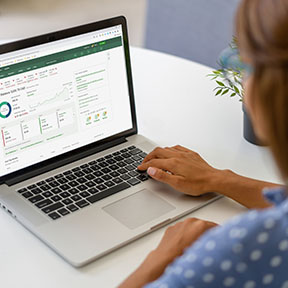
WebBroker includes screening and comparison tools that can help investors narrow down ETFs based on factors like fees, risk, performance, holdings, and diversification. Understanding these filters can help you focus on the factors that matter most to your investing goals.
Fund Overview: Exchange traded funds can be constructed to mimic the performance of stock or bond market indices. Because one can’t invest directly in an index, ETFs may be an option for investing in broad market segments or entire markets. WebBroker gives you the flexibility to customize your parameters. For example, you can select the country in which the majority of a fund’s assets are invested, the fund family (company that created the fund), fund category that includes the broad strategy for the ETF, Management Expense Ratio (MER), index and more.
Many ETFs are designed to track indexes, sectors, or broad markets. When comparing ETFs, investors may look at factors like geographic exposure, investment strategy, index tracked, and management expense ratio (MER). Lower fees can help reduce costs over time, especially for long-term investors.
Portfolio: This lets you filter your list based on parameters like fund inception, total net assets and yearly portfolio turnover. How long a fund has been operational, as well as the size of the fund are also important factors to consider as they give you historical indicators to evaluate performance. The yearly portfolio turnover is especially important. That's because a fund with a high turnover rate will incur more transaction costs. These additional costs can further reduce an investor's net return.
Investors may also compare ETFs based on factors like fund size, fund age, and portfolio turnover. ETFs with larger asset bases and longer track records may provide more historical data for evaluation. Lower portfolio turnover may also help reduce trading-related costs within the fund.
Rating & Risk: ETF ratings and risk measures can help investors compare funds. Some investors look at independent research ratings, while others focus on measures related to volatility and risk-adjusted performance. More experienced investors may also compare metrics like Beta or Sharpe Ratio.
Price & Trading Volume: Investors may review price movements to better understand market trends.
The Screeners tool in WebBroker lets you add additional parameters such as:
-
Previous close, which is the previous day's trading price
-
Price change from previous day
-
The average number of shares that are traded on a daily basis over the last 2 weeks of trading (trading volume)
For more active investors, this section can help you determine entry and exit points.
For example, investors often view the 52-week high and 52-week low as an important signal.
-
Trading above 52-week high value: This could indicate an overvalued security or simply market value appreciation. This may be a good starting point for investors looking to trade based upon price signals.
-
Trading below 52-week low value: This could indicate an undervalued security, but many prudent investors use this only as a starting point for further analysis.
Some investors also review ETF price trends and trading volume. Higher trading volume can make ETFs easier to buy and sell efficiently, while price movement may provide additional context around market activity.
Performance: While the past performance of an ETF is no guarantee of growth, it can give you an idea of how it might perform under certain market conditions. If similar market conditions occur, performance may differ and is not guaranteed.. You can filter ETFs based on the percentage change in the price over defined periods ranging from 1 week to 1 month to 3 months, YTD, all the way up to 10 years.
While past performance doesn’t guarantee future results, it can help investors understand how an ETF has performed during different market conditions. Investors can compare ETF performance across various time periods, from short-term trends to longer-term returns.
TAKE NOTE
An ETF’s past performance can provide context, but it doesn’t guarantee future returns. It’s important to evaluate ETFs based on how they fit your goals and risk tolerance, not just recent performance.
Dividend ETFs: Investors looking for income may compare dividend ETFs based on factors like distribution yield and distribution frequency.
Holding Allocation: Investors looking to diversify can compare ETFs based on sector exposure, geographic regions, or top holdings. Reviewing an ETF’s holdings can help investors better understand how it may fit within their broader portfolio strategy.
How to buy ETFs
Start investing in ETFs with TD Direct Investing
-
Open an account
Select the TD Direct Investing account you want to open online or book an appointment. -
Fund your account
Transfer funds into your account with the online bill payment or funds transfer feature – or set up recurring deposits. Moving investments from another brokerage? Ask about how we could cover the transfer fees up to $1502. -
Choose your ETFs and start investing toward your goals
You can build your portfolio using ETFs, stocks, options, mutual funds, GICs and more.
Frequently Asked Questions
What is an ETF?
An ETF, or exchange-traded fund, is an investment fund that can hold a collection of investments such as stocks or bonds. ETFs trade on exchanges similarly to stocks.
How do beginners choose ETFs?
Many beginner investors start by looking at factors like diversification, fees, risk level, and long-term investment goals. Broad market index ETFs are often a starting point for investors seeking diversified exposure.
What should I compare when evaluating ETFs?
Common factors investors compare include management expense ratio (MER), holdings, performance history, dividend yield, risk level, and geographic or sector exposure.
Are ETFs considered low-cost investments?
Many ETFs are known for having lower management fees compared to some actively managed investment funds, although costs can vary depending on the ETF.
Can ETFs pay dividends?
Yes. Some ETFs distribute income earned from the investments they hold, which may include dividends or interest payments.
Can you lose money investing in ETFs?
Yes. Like most market-based investments, ETFs can rise or fall in value depending on market conditions and the investments held within the fund.
Share this article
Related article

View our learning centre to see how we're ready to help
Open an account online – it's fast and easy
Whether you're new to self-directed investing or an experienced trader, we welcome you.